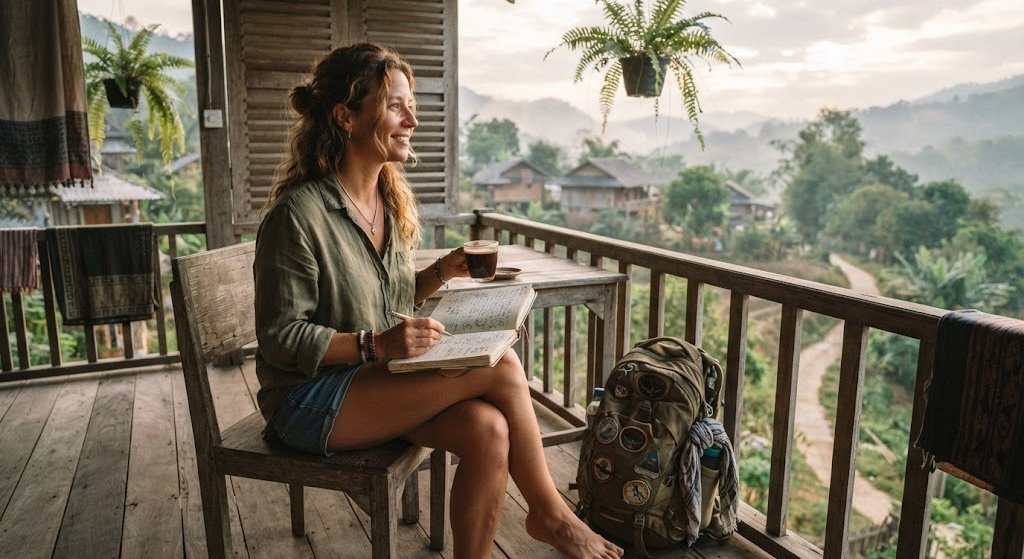
The ferry docked in the afternoon and I walked the last stretch uphill with the bag on my back, which turned out to be the best introduction to the island: you meet the slope before you meet the postcard. Santorini rewards slow attention more than any place I have stayed this year.
The lanes are arranged, not accidental
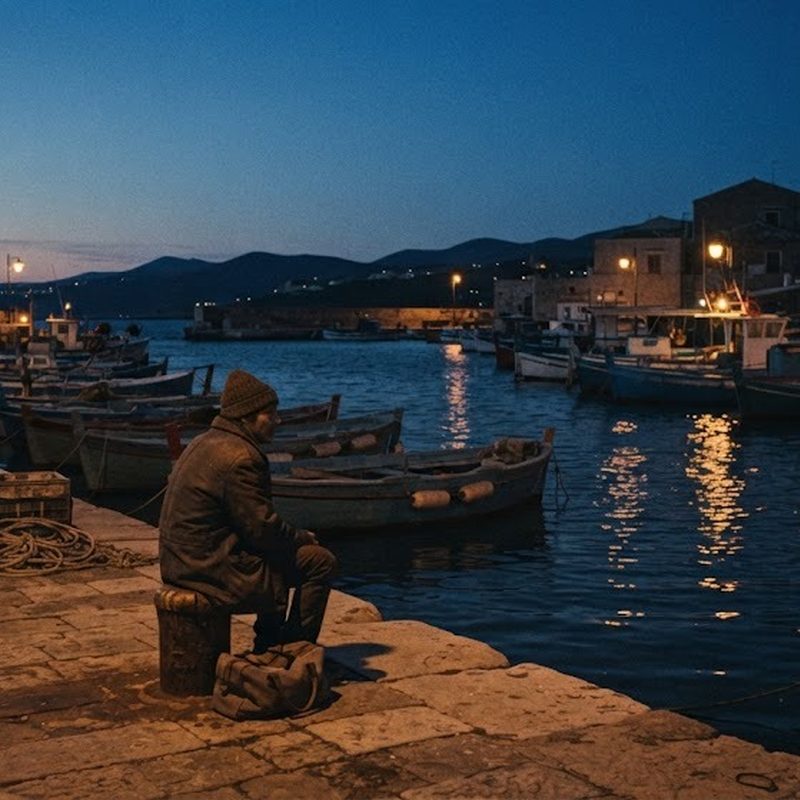
Oia sits on the rim of the caldera, and the houses are stepped down it in a way that looks improvised until you notice the logic. Each roof is a terrace for the row above, the openings are turned toward the light rather than the street, and the alleys are narrow enough to shade each other by noon. I timed a walk from the bus stop to the far end of the village at thirty-five minutes, stopping constantly, and never once felt I was on a route built for crowds.
Where the light lands
White walls here are not a style choice so much as a working surface: they throw the sun back into courtyards and keep the interiors usable. In the late afternoon the whole village turns the same warm grey-pink, and that is when I photograph, because at midday the contrast is too hard and everything flattens out.
Conversations in the courtyards
The quiet hours produced the better company. A woman restoring a doorway inherited from her grandmother told me the lime coat goes on twice a year, that the blue domes get repainted after the summer wind, and that the hard part is never the colour but the salt in the air. Those details do not appear in any itinerary, and they are the reason I remember the island as lived-in rather than staged.
She also explained why the lanes twist. The paths follow the contours and the old property lines, not a grid, so every corner turns because the ground turns. Once I knew that, the village stopped feeling like a maze and started feeling like a map drawn by feet rather than by an office.
Other things I picked up in the same afternoon: which bakeries sell out by nine, that the small museum closes between two and five without fail, and that the bus shelter by the gallery is the only one on the main lane with a roof wide enough for a sudden shower. Three facts, none of them online, all of them used at least once in the following two days.
What the days cost
The ferry from the mainland was about forty euros one way in shoulder season, and I booked the seat on the upper deck to stand outside for the approach, which is the part of the trip people fly over and then complain about missing. Food ran to ten or twelve euros a meal if I stayed away from the caldera-facing terraces, where the same plate carries the view surcharge.
I spent almost nothing on activities, because the useful thing here is walking. One afternoon I paid for a small boat out to the hot springs, which was worth it for the swim and not worth it for the organisation, and the following day I spent nothing at all and took better photographs. You could do this island comfortably on thirty euros a day above the bed, and the bed itself dropped by half after September.
How I would pace it next time
Three days is right: one for the rim walk, one for the lower villages and the wine, one with no plan at all. Stay a little inland from the main lane, and the noise drops enough that you hear the shutters at night. For the view everyone photographs, be there at first light instead of sunset and you will have the terrace nearly to yourself for twenty minutes.
The budget worked out at about seventy euros a night for a room with a balcony, six for the bus from the ferry port, and ten to twelve a meal if I ate at the places away from the caldera edge. The trick on this island is simple: anything with a view adds fifty percent to the plate, and the food two streets back is the same food.
I walked the rim path from the village to the next settlement in about ninety minutes with four stops, carried two litres of water, and saw nobody between the two points except a donkey and a man selling tomatoes from a truck. Wear shoes with grip - the path is pumice and it gives underfoot - and start early, because the return is uphill in the sun.
The small things I kept notes on
Buses are reliable, hourly, and stop running earlier than you expect: the last one up from the port goes at about 23:00 in the low season, and after that a taxi doubles the day's transport budget. Pharmacies are in the town, not in the villages, and the one by the square opens on Sunday mornings in summer.
Water is worth thinking about too. The island gets little rain, so showers are short and the towel gets reused, which is a habit I kept anyway. Laundry was three euros a load at the place near the bus stop, and the woman running it told me the high season is the only time anyone accepts card payments.
What changed for me is smaller than a lesson. I came for the caldera and left noticing doorways, and that is usually the sign that a place has been given enough time.